
Author: Nathan Zenero, OXBO Energy, LLC
Audience. Written for working geoexchange and water-well drillers and their crews, and for the contractors, design engineers, specifiers, and regulatory authorities who share responsibility for the boreholes they construct.
The Fluids an Influx Delivers
Module 1 examined the pressures a desk study can identify before spudding, and Module 2 examined the pressures the drilling operation induces. Both modules concerned the pressure that drives fluid across the borehole wall. This module concerns the fluid that pressure delivers. When the wellbore pressure falls below the pore pressure, formation fluid enters the borehole as an influx, and the character of that fluid decides the consequence. Water, brine, methane, hydrogen sulfide, carbon dioxide, and petroleum differ in how they form, where they are found, and what they do to the people at the rig, the air around it, the aquifers the borehole crosses, and the surface waters nearby.
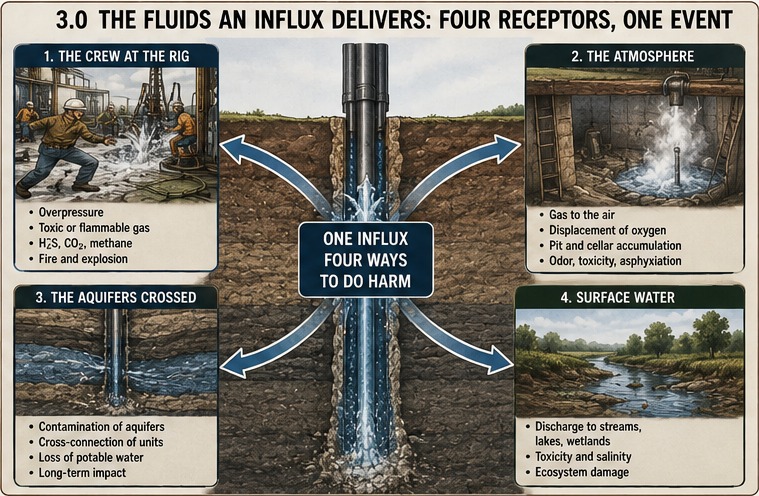
The severity of these consequences is the reason well control is practiced. A control failure that produces only water is a nuisance, while the same failure in a sour or gassy formation can be fatal within minutes, and a failure that admits brine or petroleum to an aquifer can destroy a drinking-water resource that took millennia to fill. The physics of the influx is the subject of Modules 1, 2, 5, and 6. The hazard the influx carries is the subject of this module.
An influx need not reach the surface to do its harm. Much of the damage a formation fluid causes happens below ground, where a brine, a hydrocarbon, or a migrating contaminant enters an aquifer and spreads with no sign at the rig. A borehole that crosses such a fluid can become the pathway that carries it, and an unsealed or poorly cased hole connects a contaminated zone to a clean one rather than containing it (Gailey, 2017). This is the deeper reason to know the fluids a site holds before the bit turns. Their presence governs the design of the well: the drilling-fluid barrier, the casing type, and the depths at which casing is set where it is required at all, and in the worst case whether the site can be drilled. Around Ann Arbor, Michigan, a plume of 1,4-dioxane from a former manufacturing plant has spread for miles through the groundwater, and the state has drawn a prohibition zone in which new water wells may not be installed, because a well there would draw or spread the contamination (Michigan EGLE). Comparable plumes have constrained drilling and water use elsewhere, among them the hexavalent chromium of Hinkley, California, and the industrial solvents of Woburn, Massachusetts. The desk study of Module 4 exists to find these conditions, and this module explains why they carry the weight they do.
The source-and-sink framework continues to apply. An influx is the source case, in which the formation delivers fluid to the borehole. This module asks what the source contains.
Raising these hazards is not the same as leaving the reader to face them. The desk study of Module 4 is the instrument that answers them, and it converts the presence of a fluid into a definite mitigation. Depending on what a site holds, that mitigation may set a casing string and the depth at which it lands, choose a zonal isolation material and a loop or casing material matched to the formation chemistry, define how the crew handles and disposes of the material the bore brings up, build an emergency-response plan for a toxic or flammable influx, or call for geophysical logging to locate the fluid before the bit reaches it. This module identifies the hazards so that the desk study can be built to meet them.
A Note on Shared Responsibility
Which fluids a borehole is likely to encounter is largely a question a desk study can answer. Sour formations, coal and organic-rich beds, evaporites, volcanic and geothermal ground, and legacy oil and gas fields are identifiable before the rig mobilizes, and their identification is the shared and defined duty of Module 1 and Module 4, led by the engineer and the authority having jurisdiction. Recognizing the fluid at the rig and protecting the crew from it is the driller’s share. The operational duty that connects the two is only partly defined for this work. General worker-safety law applies once a hazard is present, but most United States jurisdictions have no well-control standard specific to this work that defines the fluid-hazard plan, the monitoring, and the baseline aquifer sampling, so the hazards described here are often met without a plan built for them. Section 3.10 returns to this gap, and to the Canadian regulations that show the alternative. Detection of the influx is the subject of Module 5, and this module characterizes the hazard the detection is meant to catch.
Module Structure
- Section 3.1 classifies formation fluids by their genesis and sets out the framework of exposure limits and hazard modes used throughout the module.
- Section 3.2 examines formation water and the flowing artesian condition.
- Section 3.3 examines formation brine and its salinity hazard.
- Section 3.4 examines methane and shallow gas.
- Section 3.5 examines hydrogen sulfide.
- Section 3.6 examines carbon dioxide.
- Section 3.7 examines petroleum and its aromatic compounds.
- Section 3.8 examines the naturally occurring radioactive material that gas and brine carry.
- Section 3.9 addresses methane and carbon dioxide as an emissions-accounting and project-economics matter.
- Section 3.10 consolidates the fluid-hazard matrix, a quick-reference limits table, the missing operational standard, and the boundaries with adjacent modules.
3.1 The Classification and Genesis of Formation Fluids
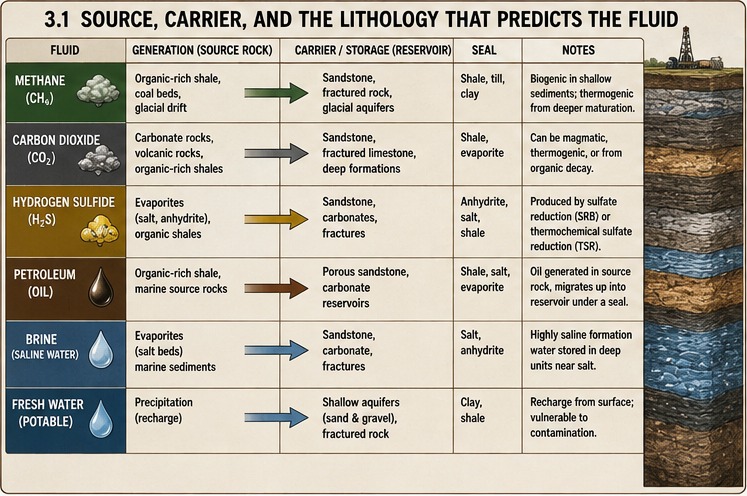
A formation fluid is generated in one place and stored in another. The rock in which a fluid forms is its source, and the rock in which a driller encounters it is its reservoir or carrier. This separation explains why lithology predicts the fluid. Methane forms in organic-rich shales, coals, and glacial drift and accumulates wherever a seal traps it. Carbon dioxide forms where carbonates are heated or where magmatic gas rises, and it collects in carbonate and volcanic terrains. Hydrogen sulfide forms where sulfate meets organic matter, most often near evaporites and in sour carbonates. Petroleum forms in a mature source rock and migrates into porous, permeable sandstones and carbonates. Brine is the concentrated formation water of deep and evaporite-bearing sequences. Fresh water occupies the recharged aquifers nearest the surface. A desk study that identifies the lithology therefore narrows the fluids the borehole may deliver.
Biogenic and Thermogenic Origin
Two temperature regimes generate most formation gas. Microbial, or biogenic, generation occurs at low temperature, where bacteria produce methane and hydrogen sulfide from organic matter and sulfate in shallow, cool sediments such as glacial drift and organic muds (Coleman et al., 1988). Thermal, or thermogenic, generation occurs at higher temperature and greater burial, where heat cracks kerogen into petroleum and gas and reduces sulfate chemically to hydrogen sulfide. The distinction matters to this work because biogenic gas places methane and hydrogen sulfide within reach of geoexchange and water-well boreholes, in formations that a petroleum model would consider barren.
The Four Receptors
Each fluid in this module is assessed against the same four receptors.
- Employees are the crew and any bystanders exposed to the fluid at the surface, through inhalation, contact, or ignition.
- Air is the atmosphere in the borehole, the pit, and the enclosed or below-grade spaces where a gas can accumulate or travel.
- Aquifers are the groundwater resources the borehole crosses and can connect or contaminate.
- Surface waters are the streams, wetlands, and impoundments that receive any fluid discharged at the surface.
Hazard Modes and Exposure Limits
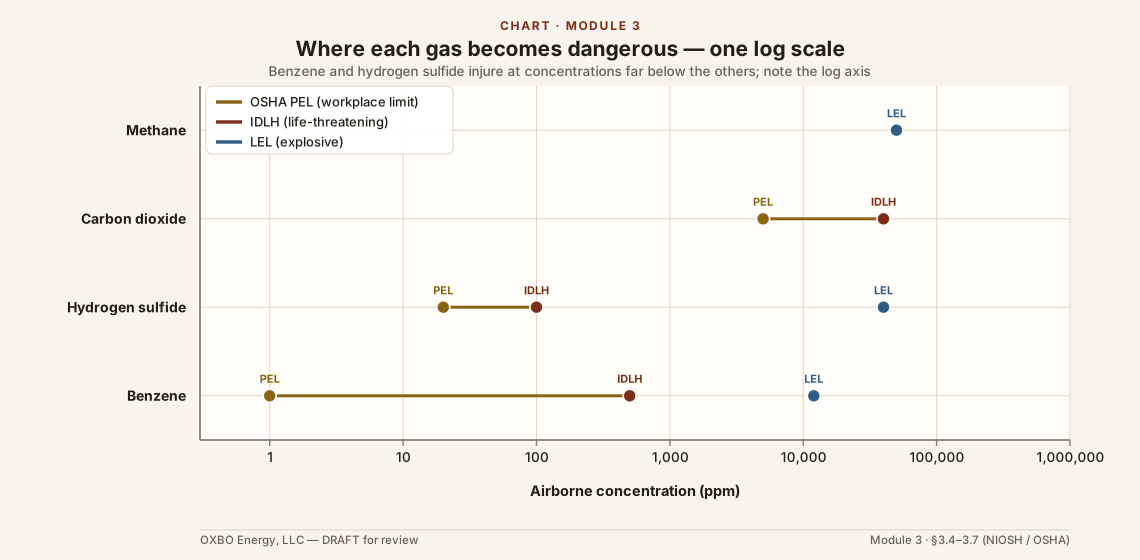
A fluid harms the crew through one or more of four physical modes. Simple asphyxiation is the displacement of oxygen by an inert gas such as methane, which lowers the oxygen fraction below the level that supports life. Chemical toxicity is the direct poisoning of the body by a substance such as hydrogen sulfide, benzene, or carbon dioxide at concentrations far below those needed to displace oxygen. Carbon dioxide belongs here as well, acting as both a toxin and an asphyxiant. Flammability is the ignition of a fuel gas mixed with air between its lower and upper explosive limits. Radiological hazard is the ionizing radiation of naturally occurring radioactive material, chiefly the radon gas and dissolved radium that the black shales and their fluids carry, treated in Section 3.8. The exposure limits and hazard terms used throughout the module are defined once below.
| Term | Meaning |
|---|---|
| OSHA PEL | Permissible Exposure Limit; the enforceable workplace ceiling or time-weighted average (OSHA 29 CFR 1910.1000). |
| NIOSH REL | Recommended Exposure Limit; the NIOSH health-based recommendation. |
| IDLH | Immediately Dangerous to Life or Health; the concentration from which a worker could not escape without irreversible harm within 30 minutes (NIOSH). |
| ACGIH TLV | Threshold Limit Value; the ACGIH consensus occupational exposure guideline. |
| LEL / UEL | Lower and Upper Explosive Limit; the range of fuel-in-air concentration that will ignite. |
| EPA MCL / SMCL | Maximum Contaminant Level (enforceable, health-based) and Secondary Maximum Contaminant Level (advisory, aesthetic) for drinking water. |
| Radon limits | The OSHA occupational concentration limit for radon-222 under the ionizing-radiation standard, 100 pCi/L (29 CFR 1910.1096, quarterly averaging basis, enforceable but dated); the EPA indoor action level for homes, 4 pCi/L. |
| Zonal isolation material | Grout, cement, resin, foam, or any material designed and placed to isolate one zone from another (Module 7). |
| Radium MCL | The EPA drinking-water limit for combined radium-226 and radium-228, 5 pCi/L. |
An influx is often a mixture. A sour gas carries methane, hydrogen sulfide, and carbon dioxide together, and a crude oil arrives with associated gas and brine, so a single event can present asphyxiation, toxicity, and flammability at the same time.
Stacked Fluids in the Michigan Basin
The hazard also compounds across a single bore, because a formation column can stack several charged beds within the drilled interval. The Michigan Basin, which underlies Michigan and extends into southwestern Ontario, is among the most active geoexchange and water-well regions on the continent, and it shows the pattern clearly. In the Ann Arbor area, three hydrocarbon-bearing formations stack one above the next within the shallow section. The Mississippian Coldwater Shale carries gas as shallow as a few hundred feet and is a recognized source of gas in water wells. Beneath it the Devonian Antrim Shale, a biogenic methane source, lies near 700 feet, and the Devonian Traverse Group, an oil reservoir, lies near 900 feet (Michigan EGLE). A single bore through that section passes two gas-charged shales and an oil-bearing limestone in sequence, so the crew meets methane and petroleum hazards together rather than in isolation. Southwestern Ontario draws on the same basin and the same fluids, in the region where the North American oil industry began. Parts of New York present a comparable stack, where the Marcellus and Utica black shales lie shallow along their subcrop belts and bring gas and near-surface radon within reach. Other basins carry their own combinations of co-incident risk, and the site-specific desk study of Module 4 exists to identify them before the rig mobilizes.
3.2 Formation Water and the Flowing Artesian Condition
Genesis and Occurrence
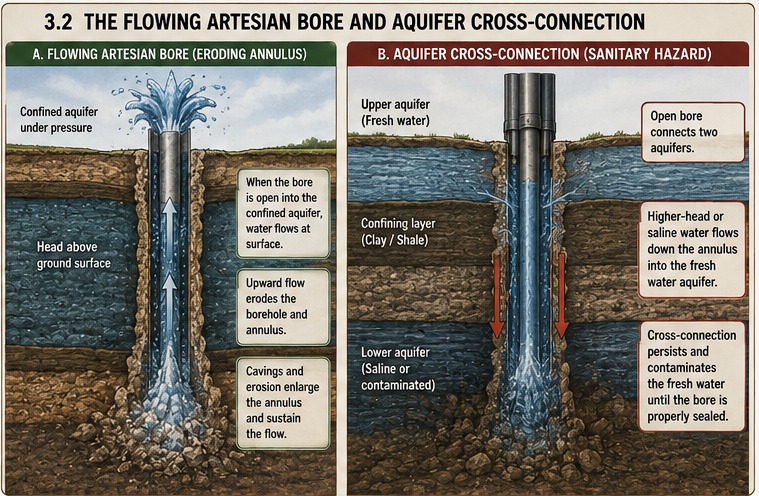
Formation water is meteoric water that recharged an aquifer and was stored under a confining layer. Where the confining head exceeds the ground elevation, the water rises in the borehole and flows at the surface, the artesian condition. The flow is encountered in confined sand and gravel aquifers and in fractured bedrock, and its strength reflects the head behind the confining bed rather than the depth of the bore.
Hazard to Employees
Fresh formation water is not toxic, and its hazard to the crew is physical. An uncontrolled artesian flow is difficult to shut in, erodes the annulus and the surrounding ground, and can undermine the rig and wash out the borehole. The flow also carries whatever the formation holds in solution, so a water strike near a sour or gassy bed can deliver hydrogen sulfide or methane to the surface with the water. The water hazard is therefore assessed together with the dissolved-gas hazards described below.
A geoexchange bore in the Kerrisdale neighbourhood of Vancouver, British Columbia, shows the scale such a flow can reach. In 2015 a borehole for a residential ground-source system pierced a confined aquifer that could not be shut in, and it discharged on the order of two million litres a day for months. Sealing it took nearly two years and, as reported, more than ten million dollars (CBC News, 2019). The fluid was fresh groundwater, and that is the point: an uncontrolled flow of clean water was a multi-million-dollar well-control failure. The same flow carrying brine or sour water, or reaching a closed freshwater watershed rather than the nearby coast, would have been far worse. The severity of a flow depends on the fluid it carries and the water it reaches, not on the volume alone.
Hazard to Air, Aquifers, and Surface Waters
Water poses no direct hazard to the air unless it carries dissolved gas. Its principal hazard is to the aquifers. While the borehole stands open, before it is sealed, it connects every aquifer it crosses, so the higher-head unit flows into the lower and a saline or contaminated unit spoils a fresh one. This construction-phase cross-connection applies to any multi-aquifer bore, closed-loop included, and prompt annular sealing is what ends it. The hazard is not limited to a saline unit spoiling a fresh one. Two aquifers that are each potable in isolation can hold different dissolved minerals, and mixing them can drive precipitation, scaling, or the mobilization of minerals that were stable until the two chemistries met, as when sulfate-bearing water meets barium-bearing water and drops a scale, or oxygenated water mobilizes iron, manganese, or arsenic, because not all waters are compatible. A closed loop circulates a sealed heat-transfer fluid and does not move formation water between zones, so this operational mixing is a concern for the open-loop, standing-column, and water-supply systems that force water through the ground, and it is less well characterized in the geoexchange context than the salinity hazards above. Both are the reason a multi-aquifer bore requires a zonal isolation material, grout, cement, resin, or foam placed to seal one zone from another, the subject of Module 7. At the surface, an uncontrolled flow floods and erodes the site and discharges sediment and any dissolved constituents into nearby surface waters, which brings the discharge under environmental permitting.
3.3 Formation Brine and the Salinity Hazard
Genesis and Occurrence
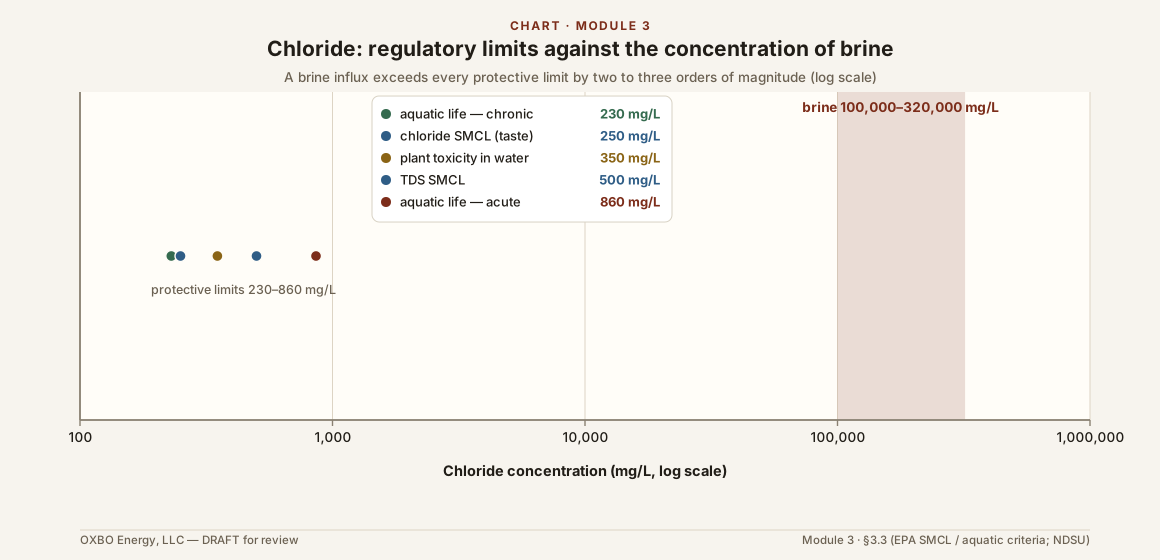
Brine is formation water concentrated far beyond the salinity of seawater. It begins as connate water trapped at deposition, and it concentrates through the dissolution of evaporite minerals and through filtration across shale membranes. Its concentration tracks proximity to salt and evaporite beds rather than depth alone. Where a borehole penetrates or approaches bedded salt, the water can approach halite saturation, on the order of 320,000 mg/L in solution, and this occurs at depths within the reach of this work. In the Permian salt country of northwestern Oklahoma, the shallow dissolution of bedded salt feeds the near-saturated brine of the Great Salt Plains in Alfalfa County, and geoexchange and water-well bores in that region have struck brine on the order of 300,000 mg/L only a few hundred feet down, where an ancient salt body lies close to the surface (Johnson, Oklahoma Geological Survey). Basinal brines elsewhere reach total dissolved solids of 100,000 mg/L or more, several times the roughly 35,000 mg/L of seawater (NDSU Extension, R1850). Brine is also denser than fresh water, so it raises the hydrostatic pressure of the column treated in Modules 1 and 2.
Hazard to Employees
Direct contact with brine irritates the skin and eyes, and a sour brine carries the hydrogen sulfide hazard of Section 3.5. A brine drawn from or through a black-shale sequence also carries dissolved radium, the naturally occurring radioactive material of Section 3.8. The graver hazard of brine is environmental, and it is realized after the fluid leaves the rig.
Hazard to Air, Aquifers, and Surface Waters
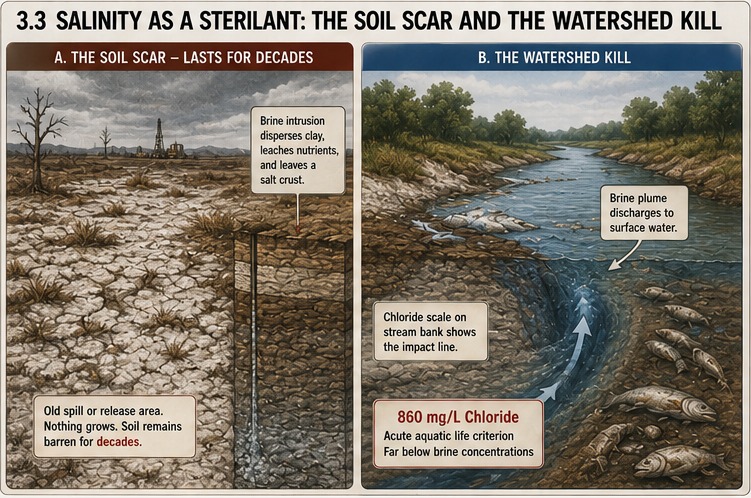
Salinity is the hazard, and it operates at concentrations that sterilize land and kill water. In soil, the sodium in brine disperses clay and destroys the soil structure, which ends infiltration and leaves a barren scar. Chloride becomes toxic to most plants above roughly 350 mg/L in water and 250 mg/L in the soil extract, concentrations that brine exceeds by orders of magnitude (NDSU Extension, R1850). The damage persists for decades, and a fifty-year-old brine spill in North Dakota remained barren at survey. In an aquifer, a small volume of brine ruins a large volume of fresh water, because the Secondary Maximum Contaminant Level for chloride is only 250 mg/L and for total dissolved solids only 500 mg/L, so a brine of 100,000 mg/L retains its taint after thousandfold dilution. In surface waters, brine is acutely lethal to aquatic life. The EPA recommended criterion for chloride is 860 mg/L for acute exposure and 230 mg/L for chronic exposure, and a brine release to a watershed delivers chloride far above the acute value, killing fish and invertebrates on contact and rendering the water unusable for livestock (EPA, National Recommended Water Quality Criteria; EPA, National Secondary Drinking Water Standards). A brine also bears on the zonal isolation, because a bentonite-based zonal isolation material loses its seal in strong salt as the clay’s swelling collapses by cation exchange, so a briny formation is a durability concern for the isolation over the life of the asset (Module 7).
3.4 Methane and Shallow Gas
Genesis and Occurrence
Methane is generated biogenically by bacteria in shallow, organic-rich sediment and thermogenically by the deep maturation of organic matter. The biogenic pathway is the one that places methane within reach of this work, in glacial drift, buried valleys, coals, and organic-rich shales, and in shallow Paleozoic sediments where microbial gas has accumulated (Coleman et al., 1988; Martini et al., 1998). A desk study that notes drift, coal, or organic shale in the section should anticipate methane.
Hazard to Employees
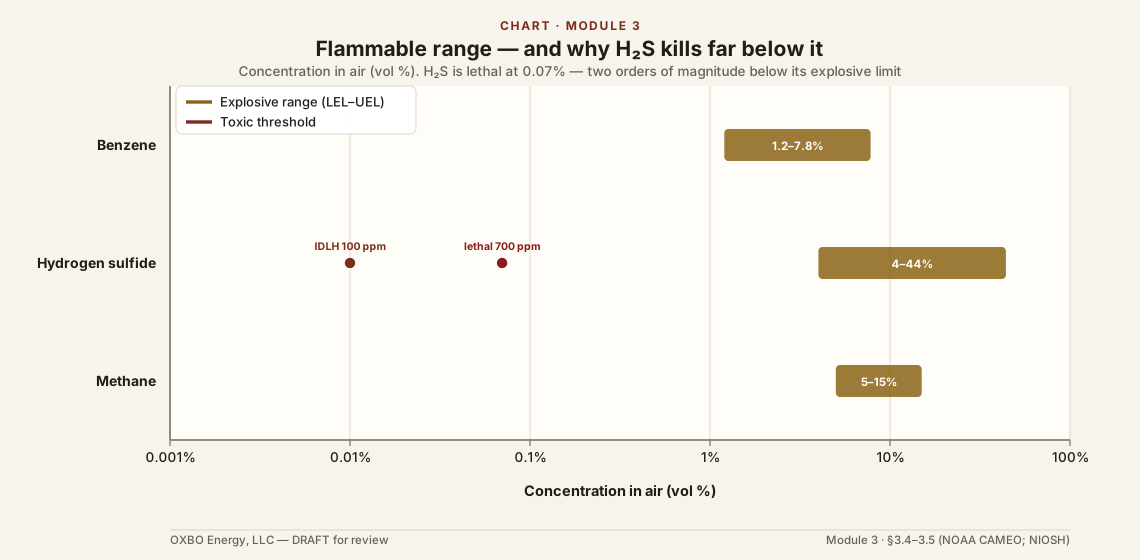
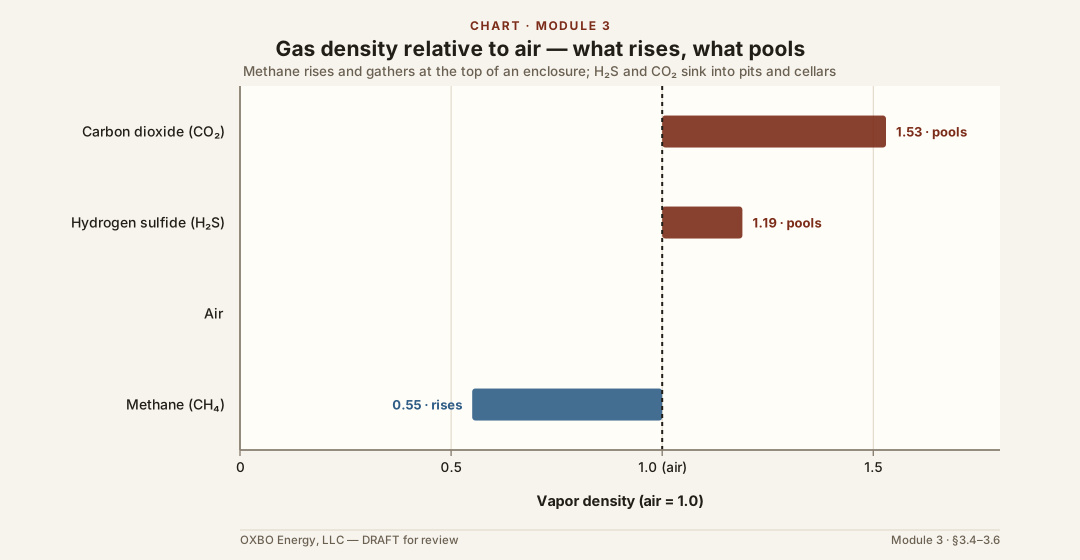
Methane threatens the crew in two ways. As a simple asphyxiant it displaces oxygen in the borehole and in any enclosed space, lowering the oxygen fraction until it can no longer support consciousness. As a flammable gas it forms an explosive mixture with air between a lower explosive limit of 5 percent and an upper explosive limit of 15 percent by volume (NOAA CAMEO Chemicals). An ignition source at the rig or in a building the gas has reached can ignite that mixture. The flammability hazard is the dominant one, because the explosive range is reached long before oxygen is meaningfully displaced. Methane is lighter than air, so it does not settle into pits and low ground the way the heavier gases of this module do. It rises and gathers at the top of any enclosure, under a well cap, at the top of the casing beneath a plug, or against the ceiling of a pump house or vault. It is also colorless and odorless. The sulfur smell of utility gas comes from a mercaptan odorant that suppliers are required to add so that leaks can be detected, and formation methane carries no such additive, so it collects with no sensory warning.
Hazard to Air, Aquifers, and Surface Waters
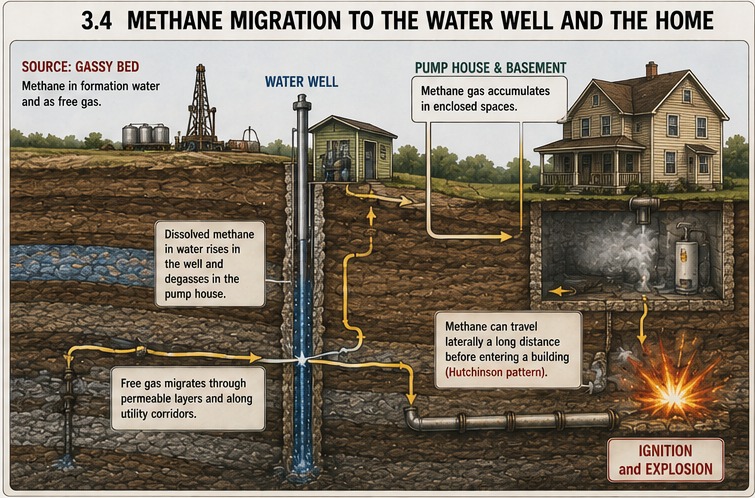
In the air, methane accumulates in low and enclosed spaces and forms an explosive atmosphere that can migrate away from the bore through permeable ground and along utilities. In aquifers, methane dissolves in groundwater and degasses where the water is drawn, which places explosive gas inside water wells and the buildings they serve. The US Department of the Interior, Office of Surface Mining, treats dissolved methane below 10 mg/L as generally safe, 10 to 28 mg/L as warranting monitoring, and above 28 mg/L as requiring immediate action to reduce the hazard (via Penn State Extension). The migration of natural gas through the shallow subsurface and into a town, with explosions in buildings far from the source, is the mechanism of the Hutchinson, Kansas, gas releases of 2001. In surface waters, methane ebullition is a local ecological effect and a greenhouse emission.
3.5 Hydrogen Sulfide
Genesis and Occurrence
Hydrogen sulfide forms wherever sulfate meets organic matter. Bacterial sulfate reduction generates it at low temperature in shallow, cool sediments, and thermochemical sulfate reduction generates it at high temperature where hydrocarbons react with sulfate minerals in carbonate and evaporite reservoirs (Machel et al., 1995). The common thread is a source of sulfate, most often the anhydrite and gypsum of evaporite sequences, the same beds whose reaction with water damaged Staufen (Module 2). Sour carbonates, organic-rich shales, and gas and oil accumulations should all raise the expectation of hydrogen sulfide.
Hazard to Employees
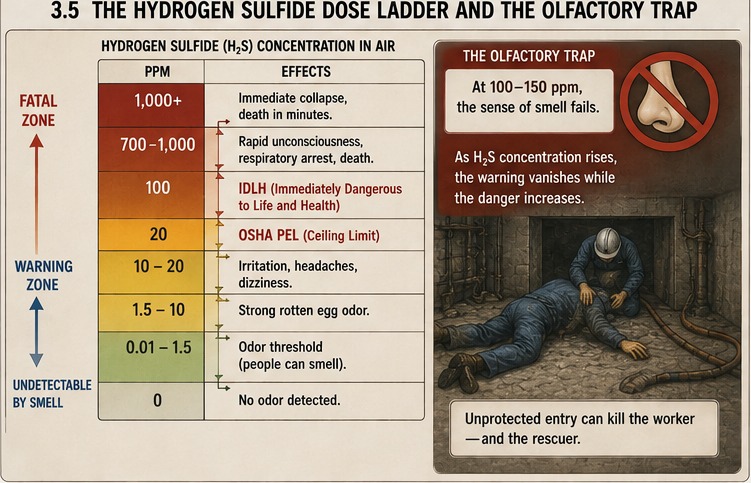
Hydrogen sulfide is the most acutely dangerous fluid in this module, and it is a chemical toxin at concentrations far below those that would displace oxygen. The OSHA Permissible Exposure Limit is a 20 ppm ceiling, the NIOSH Recommended Exposure Limit is a 10 ppm ten-minute ceiling, and the concentration Immediately Dangerous to Life or Health is 100 ppm (NIOSH; OSHA). The gas is also flammable, with a lower explosive limit near 4 percent, and it is heavier than air, so it flows downhill and pools in pits, trenches, and low or below-grade spaces. The 20 ppm ceiling is the general-industry limit, and where the work is classed as construction the OSHA ceiling is 10 ppm. The dose-response relationship is what makes it lethal at the rig.
| Concentration (ppm) | Effect |
|---|---|
| 0.01–1.5 | Odor threshold; the rotten-egg smell is first noticeable. |
| 20 | OSHA ceiling; fatigue, headache, irritability, and dizziness on continued exposure. |
| 50–100 | Conjunctivitis and respiratory-tract irritation within one hour. |
| 100–150 | Olfactory paralysis; the sense of smell is lost, and the warning disappears. |
| 200–300 | Marked eye and respiratory irritation; risk of pulmonary edema. |
| 500–700 | Staggering and collapse within minutes; death within 30 to 60 minutes. |
| 700–1,000 | Immediate collapse after one or two breaths; breathing stops; death within minutes. |
The loss of smell between 100 and 150 ppm is the central trap. The warning that the gas provides at low concentration is gone at the concentration that injures, so a worker who relies on odor advances into a lethal atmosphere believing the hazard has passed. This is also why hydrogen sulfide kills would-be rescuers, who enter a low space to recover a fallen worker and collapse beside them.
Hazard to Air, Aquifers, and Surface Waters
In the air, hydrogen sulfide forms a toxic and flammable atmosphere that settles into confined and low spaces, and its combustion produces sulfur dioxide. Because it is denser than air, it can travel from the bore along the ground into a nearby below-grade space, so a release near an occupied building could flow into a basement or an underground parking structure and collect where people are, turning a rig-side influx into a public one. In aquifers, it imparts a taste and odor at trace levels, corrodes well components, and carries its toxicity into any water drawn. In surface waters, it is toxic to aquatic life and consumes dissolved oxygen as it oxidizes.
3.6 Carbon Dioxide
Genesis and Occurrence
Carbon dioxide forms through several pathways. Microbial decay and oxidation of organic matter release it at shallow depth, the thermal breakdown of carbonate rock releases it where those rocks are heated, and magmatic degassing delivers it from the mantle along faults and beneath volcanic and geothermal ground. It is therefore expected in carbonate sequences, in volcanic and geothermal terrains, and along fault zones that tap deep gas.
Hazard to Employees
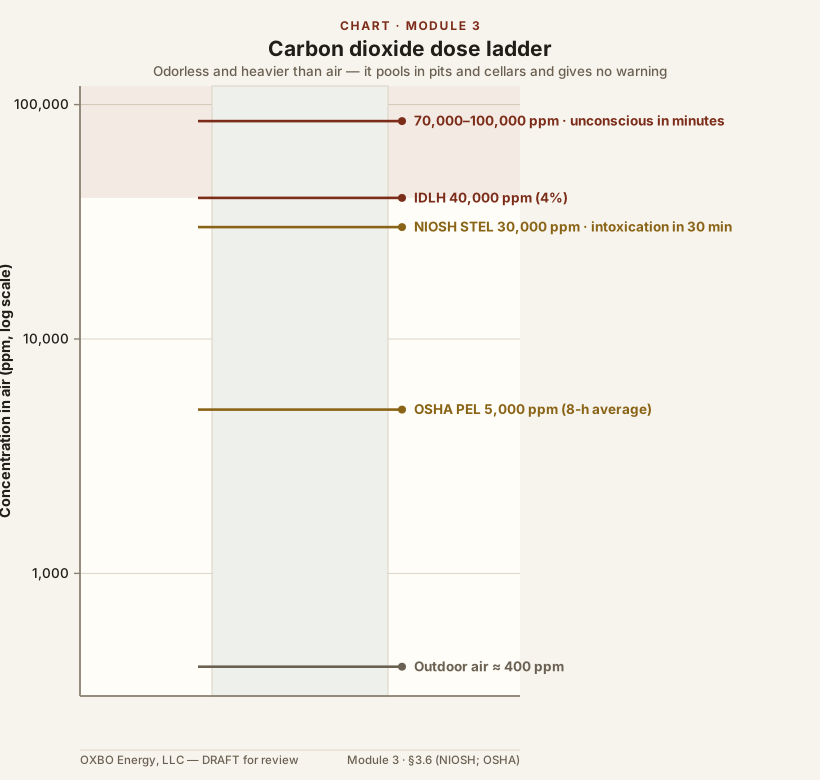
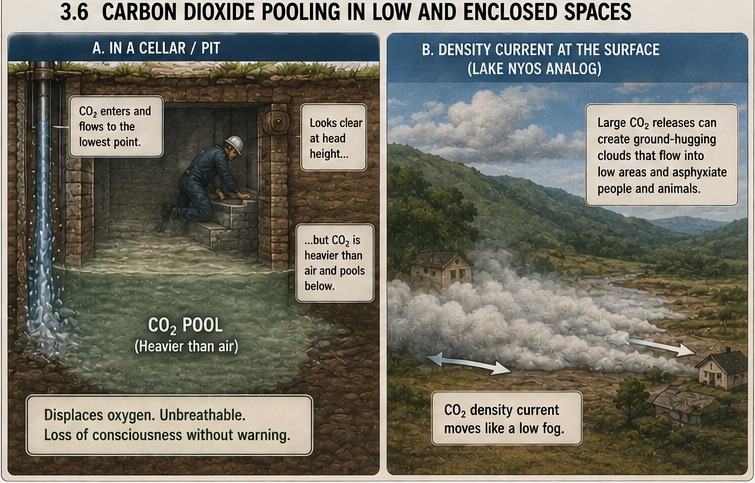
Carbon dioxide harms the crew as both an asphyxiant and a toxin, and it is heavier than air, so it collects in pits, the base of the borehole, and any low or below-grade space, where it displaces and poisons the air silently. The OSHA Permissible Exposure Limit is 5,000 ppm as an eight-hour average, the NIOSH short-term limit is 30,000 ppm, and the concentration Immediately Dangerous to Life or Health is 40,000 ppm, or 4 percent (NIOSH; OSHA). A thirty-minute exposure near 30,000 ppm produces signs of intoxication, and concentrations of 70,000 to 100,000 ppm cause unconsciousness within minutes. Because the gas is odorless and pools in the low spaces where workers reach, its accumulation gives no warning.
Hazard to Air, Aquifers, and Surface Waters
In the air, because carbon dioxide is dense it pools in and around the bore and can flow into a nearby below-grade space, so a release near an occupied building can collect in a basement or an underground parking structure and displace the air where people are. The same density drove the extreme natural case of Lake Nyos in 1986, where a sudden release from a crater lake killed more than 1,700 people (Kling et al., 1987). In aquifers, dissolved carbon dioxide forms carbonic acid, which lowers the pH and mobilizes metals and hardness from the rock. Carbonic acid is also corrosive. In an open-loop or water-supply configuration it attacks the steel a bore depends on, the pump, the drop pipe, and the metal fittings, and in any configuration it degrades a cement-based zonal isolation material, while the PVC casing and the HDPE loop resist it. The seal is the greater concern, because a corroded cement seal reopens the cross-communication that isolation is meant to prevent, so a carbonic-acid environment threatens the isolation over the operating life of the asset, the subject of Module 7. In surface waters, the same acidification is the principal effect.
3.7 Petroleum and Its Aromatic Compounds
Genesis and Occurrence
Petroleum forms when heat matures the kerogen in a source rock through the oil window, at roughly 60 to 120 °C, and the oil and its associated gas then migrate into porous, permeable reservoirs such as sandstones and carbonates, where a seal traps them (Tissot and Welte, 1984). For this work, petroleum is encountered near legacy oil and gas fields, in shallow oil-bearing sands, and at natural seeps, all of which the legacy-well and field screens of Modules 1 and 4 are meant to flag. The object at the rig is to recognize and isolate petroleum, not to produce it.
Hazard to Employees
Crude oil is flammable, and it carries volatile aromatic compounds that are toxic at low concentration. The aromatics of first concern are the BTEX group, benzene, toluene, ethylbenzene, and the xylenes, which are present in essentially all crude oils. Benzene is a proven human carcinogen, classified in the highest category by the international review, and chronic exposure causes leukemia (IARC; ATSDR). Its occupational limits reflect that hazard. The OSHA Permissible Exposure Limit is 1 ppm as an eight-hour average, with a 5 ppm short-term limit under the benzene standard (29 CFR 1910.1028), the NIOSH Recommended Exposure Limit is 0.1 ppm as an eight-hour average, with a 1 ppm short-term limit, and the ACGIH Threshold Limit Value is 0.5 ppm. A sour crude adds the hydrogen sulfide hazard of Section 3.5, so a petroleum influx can present fire, carcinogenic vapor, and acute toxicity together.
Hazard to Air, Aquifers, and Surface Waters
In the air, the volatile aromatics evaporate from an exposed crude and expose the crew and the neighborhood to benzene vapor. In aquifers, benzene is the governing hazard, because it is the most soluble and mobile of the aromatics. Its aqueous solubility is about 1,750 mg/L, roughly ten times that of ethylbenzene or the xylenes, and it sorbs weakly to the aquifer solids, so it travels near the velocity of the groundwater and forms the leading edge of a dissolved plume (Enviro Wiki, Petroleum Hydrocarbons). The enforceable drinking-water limit for benzene is 0.005 mg/L, so its solubility exceeds the limit by a factor of several hundred thousand, and a small volume of crude contaminates an enormous volume of water to above the standard. In surface waters, crude forms a sheen that is toxic to aquatic life and expensive to remediate, and it carries a long liability.
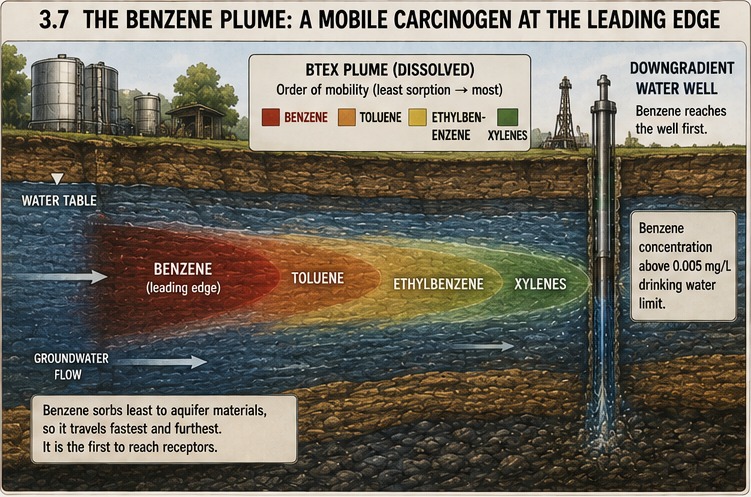
3.8 Naturally Occurring Radioactive Material
Genesis and Occurrence
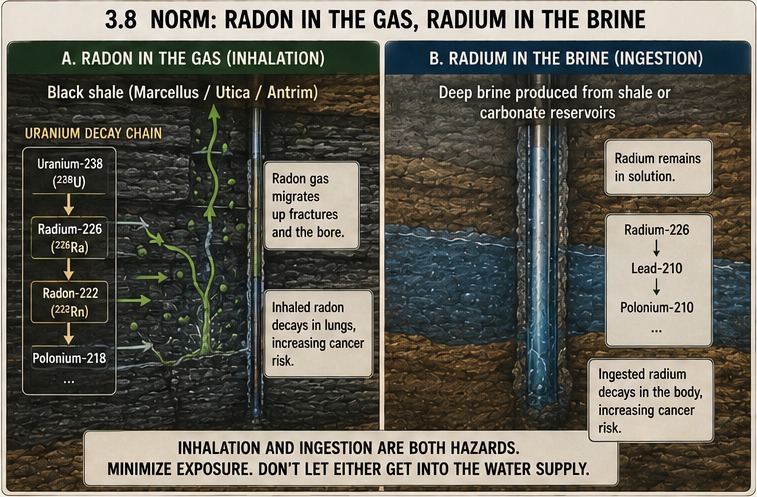
Organic-rich black shales deposited under anoxic conditions take up uranium from seawater, and that uranium decays through a chain that yields radium and then radon. The enrichment follows the organic, anoxic deposition rather than the type of gas the shale later produces, and the Marcellus, Utica, and Antrim are all enriched in this way. The radioactivity travels on the fluids the shale contacts. Radon, a radioactive gas, rises with natural gas and soil gas, and radium, soluble in strong brine, dissolves into the formation water. Where a uraniferous Paleozoic shale lies near the surface, as in parts of New York, the radon reaches the drilled interval and the near-surface soil gas (Geology, 1988).
Keeping the Hazard in Proportion
Naturally occurring radioactive material is present everywhere, and most of it is trivial. The soil and rock a bore returns are usually near natural background and deliver doses on the scale of eating a banana, far below a chest radiograph or a high-altitude flight. Regulatory concern is reserved for material whose activity has been raised above the in-situ level, and that concentrated form, technologically enhanced naturally occurring radioactive material, is defined by the enhancement (EPA). A drilling operation rarely produces it. Solids-control equipment such as desanders, desilters, and centrifuges separates cuttings by size and density, and it returns solids at the same radionuclide concentration as the formation, without the concentration step that defines the enhanced waste. The high activities that give the term its reputation, the pipe scale that can reach hundreds of thousands of picocuries per gram and the tank sludge that averages tens, arise from the prolonged production of formation brine rather than from drilling a hole (EPA). State regulation of this material varies widely. Only a minority of states have specific TENORM rules, and in the rest drilling spoils are handled as ordinary solid waste or are not specifically addressed. Where a program exists, low-activity drilling waste is commonly exempt or accepted at a licensed solid-waste or construction landfill, subject to state acceptance limits (ASTSWMO). Where a crew does circulate and hold formation brine, radium can enter the water, and the drinking-water limit for combined radium-226 and radium-228 is 5 pCi/L.
The Real Exception: Radon
Radon is the genuine occupational hazard, because it is a radioactive gas the crew inhales, and it is the second leading cause of lung cancer after smoking (EPA; CDC). It is colorless and odorless and gives no sensory warning. In open air it disperses and poses little risk, but it collects in the borehole, the pit, and enclosed or below-grade spaces, in the same low places that trap the heavier gases of this module. Radon is one hazard in this module for which an operational duty is already defined. OSHA regulates occupational radon under its ionizing-radiation standard, setting a concentration limit for radon-222 of 100 pCi/L (29 CFR 1910.1096, on a quarterly averaging basis), and its excavation and confined-space rules require the testing of enclosed and below-grade atmospheres and the provision of ventilation or respiratory protection where a hazardous atmosphere can collect (29 CFR 1926.651). The 100 pCi/L value is the enforceable but dated 1971 figure, the dose is in fact governed by the radon decay products, and current guidance is lower, so it should be read as a floor rather than a target. The 4 pCi/L level the public knows is a separate and lower action level for homes.
Cumulative Exposure on Long Projects
The exposure that matters most on this work is the one that accumulates. A large project can hold a crew on one location for months or years, and a low radon concentration or the repeated handling of radium-bearing material adds over that time to a dose a single day would not produce. Where the desk study flags radon-bearing or black-shale ground, the monitoring and the protection are a long-term measure rather than a one-day precaution.
3.9 Emissions and the Project’s Credits
Methane and carbon dioxide are greenhouse gases, and their release during construction carries an economic consequence for the owner that is worth stating plainly. This is an owner-facing point about project economics, and nothing here is tax, accounting, or financial advice.
A geoexchange system is often installed for its low-emission profile and financed in part on the carbon credits, incentives, and green-building or emissions-accounting benefits that follow from it, and the accounting frameworks that govern those benefits weight methane well above carbon dioxide for each unit released. Federal greenhouse-gas reporting applies at facility scales far above a single bore, so a rig release is generally not a reportable event, and the exposure is to the project’s own carbon accounting rather than to a reporting penalty. Venting formation methane or carbon dioxide while drilling a gas-charged or carbonated formation releases the kind of emission the system was meant to avoid, and depending on the accounting rules of the applicable program, a sustained uncontrolled release could erode or offset the construction-phase carbon budget the project was credited for. Containing a gassy influx is therefore an economic interest as well as a safety one, and the safety case stands on its own.
3.10 Synthesis: The Fluid-Hazard Matrix, the Missing Standard, and Boundaries
The matrix below consolidates each fluid, its genesis, the setting a driller is most likely to meet it in, the primary hazard to the crew, the governing exposure limit, and the environmental hazard.
| Fluid | Genesis | Likely Setting | Primary Employee Hazard | Governing Limit | Environmental Hazard |
|---|---|---|---|---|---|
| Formation water | Meteoric recharge under confining head | Confined sand, gravel, and fractured bedrock | Uncontrolled artesian flow; erosion and washout | — | Aquifer cross-connection; flooding and sediment |
| Brine | Connate water concentrated by evaporites and filtration | Deep and evaporite-associated formations | Contact irritation; sour-brine H₂S | Chloride SMCL 250 mg/L | Soil sterilization; watershed kill (Cl⁻ acute 860 mg/L) |
| Methane | Biogenic and thermogenic | Drift, coal, organic shale | Explosion (LEL 5%, UEL 15%); asphyxiation | LEL 5% | Dissolved gas in wells (action >28 mg/L); migration |
| Hydrogen sulfide | Bacterial and thermochemical sulfate reduction | Evaporites, sour carbonates, organic shales | Acute toxicity; olfactory paralysis | PEL 20 ppm; IDLH 100 ppm | Aquatic toxicity; oxygen demand |
| Carbon dioxide | Decay, carbonate heating, magmatic degassing | Carbonates, volcanic and geothermal ground | Toxicity and asphyxiation; pools in low and below-grade spaces | PEL 5,000 ppm; IDLH 40,000 ppm | Groundwater acidification; corrodes cement seals |
| Petroleum | Kerogen maturation and migration | Reservoirs near legacy fields and seeps | Fire; benzene carcinogenicity | Benzene PEL 1 ppm; MCL 0.005 mg/L | Mobile benzene plume in aquifers |
| NORM (radon, radium) | Uranium decay in organic black shales | Marcellus, Utica, and Antrim shales and their gas and brine | Radon inhalation, chiefly in enclosed or long-duration work; spoils usually near background | Radon 100 pCi/L (OSHA); radium 5 pCi/L | Radium where brine is handled; radon in groundwater |
Quick Reference: Fluids, Hazards, and Limits
| Fluid | Hazard mode | OSHA occupational limit | IDLH | Flammable range | Water / environmental limit |
|---|---|---|---|---|---|
| Formation water | Physical (flow, cross-connection) | — | — | — | Aquifer cross-connection; discharge permitting |
| Brine | Environmental salinity; skin and eye | — | — | — | Chloride SMCL 250, TDS 500; chloride aquatic acute 860, chronic 230 mg/L |
| Methane | Flammable; simple asphyxiant | Simple asphyxiant (no PEL) | — | 5%–15% | Dissolved-methane well action >28 mg/L |
| Hydrogen sulfide | Chemical toxicity; flammable | 20 ppm ceiling (10 ppm construction) | 100 ppm | ~4%–44% | Aquatic toxicity; taste and odor |
| Carbon dioxide | Toxicity and asphyxiation | 5,000 ppm TWA; 30,000 ppm STEL | 40,000 ppm | Non-flammable | Groundwater acidification |
| Petroleum (benzene marker) | Fire; carcinogen | Benzene 1 ppm TWA; 5 ppm STEL | Benzene 500 ppm | Flammable | Benzene MCL 0.005 mg/L |
| NORM (radon, radium) | Radiological (lung cancer) | Radon 100 pCi/L (1910.1096) | — | — | Radium MCL 5 pCi/L |
The Missing Standard
The identification of these fluids is a shared and defined duty. A desk study can find the sour formations, the gassy beds, the evaporites, and the legacy fields that predict them, and that identification falls to the engineer and the authority having jurisdiction, with recognition at the rig falling to the driller. General worker-safety law already reaches the fluids once they are present. In the United States the OSHA General Duty Clause obliges an employer to protect workers from a recognized hazard such as hydrogen sulfide, the permissible exposure limits are themselves enforceable, and the confined-space, respiratory-protection, excavation, and ionizing-radiation standards impose monitoring and protection where a crew enters a pit, a below-grade space, or radon-bearing ground. What most United States jurisdictions lack is a well-control standard specific to this work, one that would define and assign the fluid-hazard plan, the tripping and flow-check practice, the baseline and follow-up aquifer sampling, and the zonal isolation and its verification, rather than leaving them to the general duty and the crew’s own judgment. That such a standard is workable is not hypothetical. In Canada, British Columbia’s Groundwater Protection Regulation under the Water Sustainability Act requires flowing-artesian wells to be equipped against backflow and their shut-in pressure reported, and Ontario’s Wells Regulation requires cased and annularly sealed wells, the control of flowing wells, and the prevention of movement of water between aquifers, each performed by a certified driller. This course calls for a comparable bore-construction standard in the jurisdictions that lack one, in the interest of protecting life, health, property, and the environment.
Module Boundaries
- Module 4 develops the desk study that predicts which of these fluids a site is likely to deliver and specifies the mitigations they require, from casing and zonal isolation to logging, material handling, and emergency planning, as a screen run before the rig mobilizes.
- Module 5 examines the detection of an influx and the identification of its fluid, including atmospheric gas detection as the layer that shortens the response time.
- Module 6 examines the barriers and the control measures that stop an influx and protect the crew from the fluid it carries.
- Module 7 examines the zonal isolation that prevents the cross-contamination of aquifers over the operating life of the asset.
- Module 8 examines the records that carry the risk forward, including baseline groundwater sampling tiered to the fluid hazard and the reporting of any encounter.
An influx delivers a fluid, and the fluid decides whether the event is a nuisance or a fatality. Module 4 turns to the desk study that anticipates which fluid a site will deliver, so that the crew meets it prepared.
Key References
- Agency for Toxic Substances and Disease Registry (ATSDR). Toxicological Profile for Hydrogen Sulfide and Carbonyl Sulfide; Toxicological Profile for Benzene. U.S. Department of Health and Human Services.
- Association of State and Territorial Solid Waste Management Officials (ASTSWMO) (2014). State Regulations and Policies for Control of NORM/TENORM.
- CBC News (2019). City of Vancouver on hook for $10 million cost of capping massive groundwater leak (Kerrisdale flowing-artesian geoexchange incident, 2015). See also the Province of British Columbia flowing-artesian well drilling advisories.
- Coleman, D.D., Liu, C.L., and Riley, K.M. (1988). Microbial methane in the shallow Paleozoic sediments and glacial deposits of Illinois, U.S.A. Chemical Geology, 71(1–3), 23–40.
- Gailey, R.M. (2017). Inactive supply wells as conduits for flow and contaminant migration: conditions of occurrence and suggestions for management. Hydrogeology Journal, 25, 2163–2183.
- Government of Ontario. Wells Regulation (O. Reg. 903 under the Ontario Water Resources Act): well construction, casing, annular-space sealing, control of flowing wells, and prevention of movement of water between aquifers.
- Province of British Columbia. Groundwater Protection Regulation under the Water Sustainability Act (2016): flowing-artesian well control (backflow prevention, shut-in pressure reporting), construction and sealing standards, and certified well drillers.
- Enviro Wiki. Petroleum Hydrocarbons (PHCs) (BTEX solubility and mobility). https://www.enviro.wiki/
- International Agency for Research on Cancer (IARC). Benzene. IARC Monographs, Group 1 (carcinogenic to humans).
- Johnson, K.S. Great Salt Plains, Alfalfa County, Oklahoma, and Salt Plains and Brines in Western Oklahoma from Dissolution of Permian Salt. Oklahoma Geological Survey.
- Kling, G.W., et al. (1987). The 1986 Lake Nyos gas disaster in Cameroon, West Africa. Science, 236(4798), 169–175.
- Machel, H.G., Krouse, H.R., and Sassen, R. (1995). Products and distinguishing criteria of bacterial and thermochemical sulfate reduction. Applied Geochemistry, 10(4), 373–389.
- Martini, A.M., et al. (1998). Genetic and temporal relations between formation waters and biogenic methane, Antrim Shale, Michigan Basin. Geochimica et Cosmochimica Acta, 62(10), 1699–1720.
- Michigan Department of Environment, Great Lakes, and Energy (EGLE). Michigan Basin stratigraphy and the Coldwater, Antrim, and Traverse formations; Gelman Sciences 1,4-dioxane site and groundwater Prohibition Zone, Washtenaw County.
- Radon in Onondaga County, New York: paleohydrogeology and redistribution of uranium in Paleozoic sedimentary rocks. (1988). Geology, 16(9), 775–778.
- Rowan, E.L., Engle, M.A., Kirby, C.S., and Kraemer, T.F. (2011). Radium Content of Oil- and Gas-Field Produced Waters in the Northern Appalachian Basin (USA). U.S. Geological Survey Scientific Investigations Report 2011–5135.
- National Institute for Occupational Safety and Health (NIOSH). Pocket Guide to Chemical Hazards and Documentation for Immediately Dangerous to Life or Health Concentrations (hydrogen sulfide, carbon dioxide, methane, benzene). CDC.
- North Dakota State University Extension (2019). Environmental Impacts of Brine (Produced Water), publication R1850.
- Occupational Safety and Health Administration (OSHA). 29 CFR 1910.1000 (air contaminants, Z tables); 29 CFR 1910.1028 (benzene); 29 CFR 1910.1096 (ionizing radiation); 29 CFR 1926.651 (excavations, hazardous atmospheres); Hydrogen Sulfide safety topic.
- Tissot, B.P., and Welte, D.H. (1984). Petroleum Formation and Occurrence (2nd ed.). Springer-Verlag.
- U.S. Environmental Protection Agency. National Primary Drinking Water Regulations (benzene MCL; combined radium-226/228 MCL); National Secondary Drinking Water Standards; National Recommended Water Quality Criteria — Aquatic Life (chloride); A Citizen’s Guide to Radon (4 pCi/L action level); Technologically Enhanced Naturally Occurring Radioactive Materials (TENORM): Oil and Gas Production Wastes; Greenhouse Gas Reporting Program (40 CFR Part 98); Wells G&H Superfund site, Woburn, Massachusetts.
- U.S. Geological Survey. Hexavalent-chromium groundwater plumes, Hinkley Valley, California (subsurface contaminant-plume example).
- U.S. Department of the Interior, Office of Surface Mining Reclamation and Enforcement. Dissolved-methane action thresholds for water wells (via Penn State Extension, Methane Gas and Its Removal from Water Wells).
This module is © 2026 Nathan Zenero, OXBO Energy, LLC and is licensed under the Creative Commons Attribution-NonCommercial 4.0 International license (CC BY-NC 4.0), on the terms stated in Module 0. Requests for commercial licensing, submissions for the public errata, and accounts of encountered influx may be sent to nathan@oxbo.energy.